
Reviews / Terminator 2D: No Fate
Eletodd Honest ReviewTerminator 2D: No Fate review
Retro perfection for anyone who grew up on 16-bit
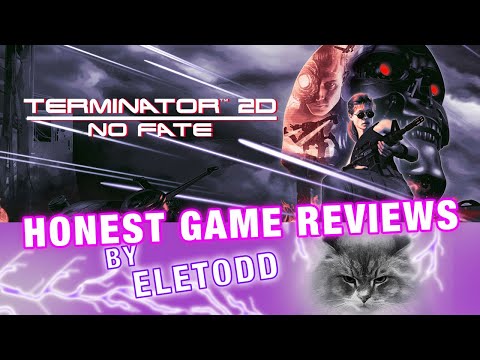 VIDEO REVIEW8:23
Welcome, retro gamers young and old like me. After months of waiting, multiple delays and a physical-disc price that nearly made me lose faith, it was finally time to roll, slide, shoot, jump, and die, die and die some more in Terminator 2D: No Fate from developer Bitmap Bureau. I played it on Xbox Series X.
Who this game is for
If you were born in the late ’70s or early ’80s like me, you remember quarter-eating arcades, the early days of home consoles, and running to Blockbuster every Friday after school to rent a new game and a movie. If your first game was 3D Mario on the N64, polygon Lara Croft or, heaven forbid, Master Chief, that’s perfectly OK. This game just isn’t really for you. It’s for the kid who kept renting Alien 3 on the Super Nintendo and nearly broke his fingers on Super Contra, RoboCop, Metal Slug and Super Metroid.
I still play just as much as I ever did, but somewhere along the way I lost that pure Super Nintendo joy: memorizing every power-up and extra-life location from the maps in Nintendo Power. Terminator 2D brought that feeling back, which I honestly didn’t think a 2D game made today could do.
I also really appreciate that the developers stayed focused and didn’t let it turn into yet another 10- or 20-hour modern Metroidvania. We have plenty of those.
A love letter to Terminator 2
There was no movie license bigger than Terminator 2 in 1991. I was a bit young for the first film, but the sequel, with rebel John Connor and his badass guardian angel, the T-800, was required viewing.
The campaign is 12 short levels that switch between three characters, mostly Sarah Connor and the T-800. It mixes run-and-gun action, some stealth and duck-and-cover, and scripted set pieces like the bike chase and the helicopter battle. You start in the desert before Sarah’s capture and fight your way to the finale in the steel mill, with a special Future War level along the way.
Between levels you make a few key decisions, like whether to spare the scientist Dyson or reset the T-800’s chip, and they change how the story ends. These alternate routes are a great way to add replay value, and some game modes don’t unlock until you’ve played through a few times to find them.
The soundtrack is close to perfect arcade music. It brings the classic movie theme to life, even includes two vocal songs from the famous T-800 biker bar scene, and keeps every level’s energy up.
Gameplay and controls
For the most part, Terminator 2D is exactly what you want from a throwback. The controls are quick and simple, they change a bit from character to character, and the levels follow the movie’s scenes with amazing detail.
My one recurring issue was balancing classic and modern controls. Some actions work better on the analog stick, like aiming or jumping at an angle. Others work better on the d-pad, like jumping straight up to grab a ledge or ducking quickly to shoot. When you mix the two, you end up rolling or sliding by accident. Back in the day we only had a d-pad and buttons, and emulating that feel on a modern controller sometimes gets in the way.
The biggest problem is jumping. You can’t jump very high, it’s pretty rigid, and I missed a lot of jumps, especially those straight-up ledge grabs. I fumbled quite a bit in my first few playthroughs as the levels got harder. Eventually it clicked, and I found the jump-slide-shoot rhythm that carries you through some very chaotic, very hard levels.
Difficulty: old-school tough
If you’re not used to this style of game, be ready. There’s no mid-campaign save.
- Easy: unlimited continues. Play this first to see the story and get a feel for the game.
- Normal and harder: limited continues and more enemies. Even at this length it can be brutally hard.
There’s even an achievement for beating Arcade mode in under 15 minutes. Like the games it’s inspired by, this is about perfecting your runs, not banging your head against a checkpoint until you get lucky.
Length and price
Some people will complain about the length, especially at $30, or double that for the limited physical disc. I beat my first playthrough in under an hour. But that’s the point. As soon as I finished, I wanted to go again, both to see the other routes and to try a harder difficulty.
Unlockable modes stretch it to roughly three or four hours depending on your skill: training to practice, boss rush, and timed arcade. Still, if you only plan to play it once, or you don’t have that nostalgic connection to the movie and this style of game, the price may not feel like good value.
Verdict: retro perfection, if this is your childhood
For someone who grew up in the glory days of 8-bit and 16-bit, and who still plays arcade reissues on the Evercade, this game is everything I hoped for. Bitmap Bureau captured my gaming childhood and made what may be the most faithful movie-licensed game in decades. I’m happy to pay the price and replay it for a few hours to support them.
My aging reflexes may never S-rank every level or unlock every trophy, but the trip back in time was something I’m very thankful for. If you grew up playing games like this, don’t pass this one up.